Criterium-Cromer Engineers provides reserve studies for communities in Miami-Dade, Broward, and Palm Beach counties – always overseen by a licensed Professional Engineer (P.E.). Our studies help you plan ahead, budget wisely, and avoid unpleasant financial surprises for your condominium or homeowner association.
What is a Reserve Study?
A reserve study is a long-term budget plan for your property’s shared assets – things like roofs, pavement, elevators, and mechanical systems. It projects when each item will need repair or replacement and how much it will cost, so your community can set aside funds over time. For structural and safety-critical elements, see our Structural Integrity Reserve Study (SIRS) page.
Why It Matters
Without a clear plan, associations risk underfunding future projects – which can lead to sudden special assessments, higher owner costs, and deferred maintenance. A reserve study gives your board the information needed to plan repairs on schedule, keep the property safe, and comply with Florida HOA requirements.
What’s Included in Our Reserve Studies
- On-site inspection of major common elements
- Assessment of each component’s remaining useful life
- Estimated repair and replacement costs (current and future)
- Funding plan options for different budget strategies
- Clear, easy-to-read report with photos and tables
Our Process
- Initial discussion – We review your property, goals, and any past reserve studies.
- Site visit – A licensed P.E. or trained inspector documents each component.
- Cost analysis – We research local construction costs for accuracy.
- Report delivery – You receive a complete study with funding recommendations.
- Follow-up – We answer questions and help with any board presentations.
Service Area
We serve communities throughout Miami-Dade, Broward, and Palm Beach counties – including Miami, Fort Lauderdale, Hollywood, Pembroke Pines, Boca Raton, West Palm Beach, and surrounding areas. We also provide related services such as Transition Studies and Property Condition Assessments for commercial properties.
Reserve Study Cost
Reserve studies for condominiums and HOAs typically start in the low thousands of dollars, with final cost depending on property size, complexity, and location. Read more: How Much Does a Reserve Study Cost in Florida?
Get Started
Request a Proposal or call 305‑250‑2936 to schedule your Reserve Study.
Not ready yet? Contact us with questions – we’ll guide you through the process.
What’s included in a reserve study?
An inspection of major components, life expectancy estimates, cost projections, and funding plans.
How is a reserve study different from a SIRS?
A Structural Integrity Reserve Study (SIRS) is a Florida-specific study that focuses on structural and safety-critical elements. A reserve study covers all major common elements, not just those required under SIRS.
How often should we update our reserve study?
Every 3–5 years, or sooner if there are major repairs, cost changes, or new legal requirements.
How much does a reserve study cost?
Most cost a few thousand dollars and up, depending on the property. Learn more here.
How long does the process take?
Typically 2–4 weeks from site visit to final report.
Who performs the reserve study?
All studies are overseen by a licensed Professional Engineer for accuracy and compliance.
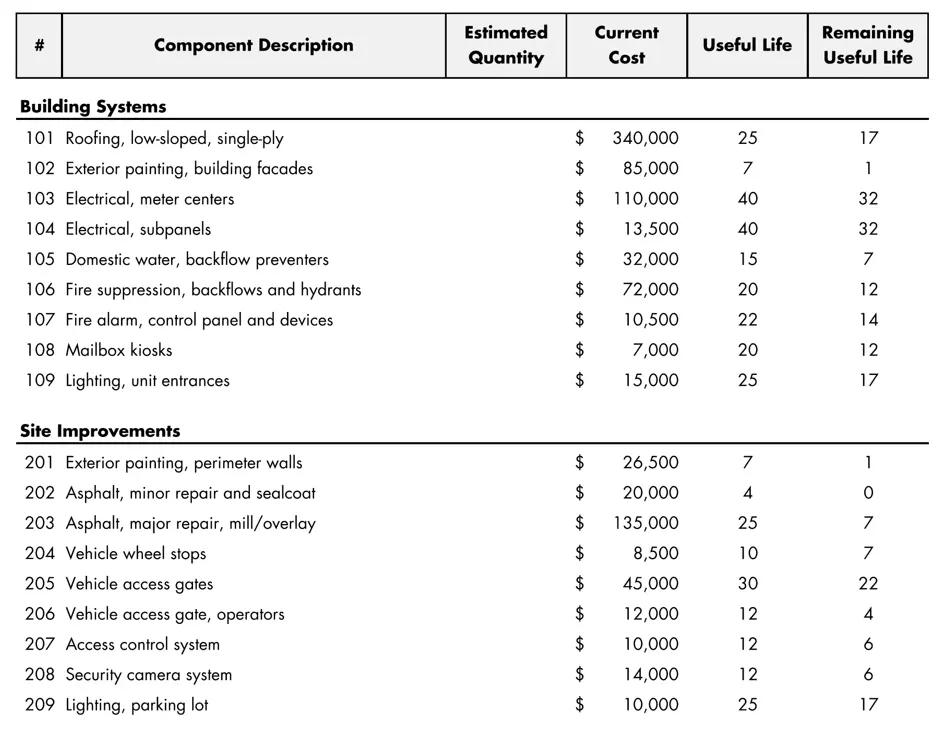
The component list is the foundation of a reserve study. It identifies the major common area components evaluated, along with their estimated remaining life, replacement cost, and projected timing. This excerpt illustrates how components are organized and documented to support long term planning and defensible funding recommendations.
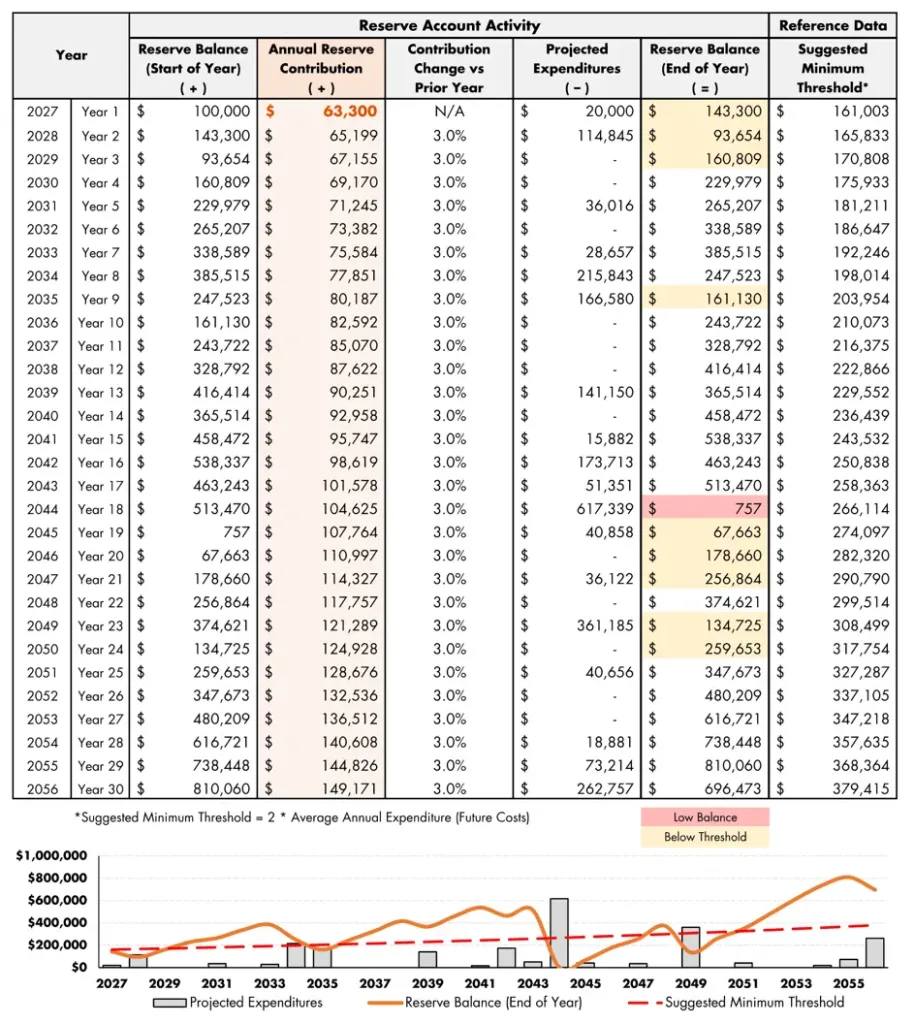
Straight line funding allocates reserve contributions evenly over time based on projected repair and replacement costs. This approach is simple and predictable, but may not reflect how expenses actually occur. The table below shows a straight line funding projection and how annual contributions compare to anticipated expenditures. See our Straight-Line vs. Pooled Reserve Funding comparison guide for more information.
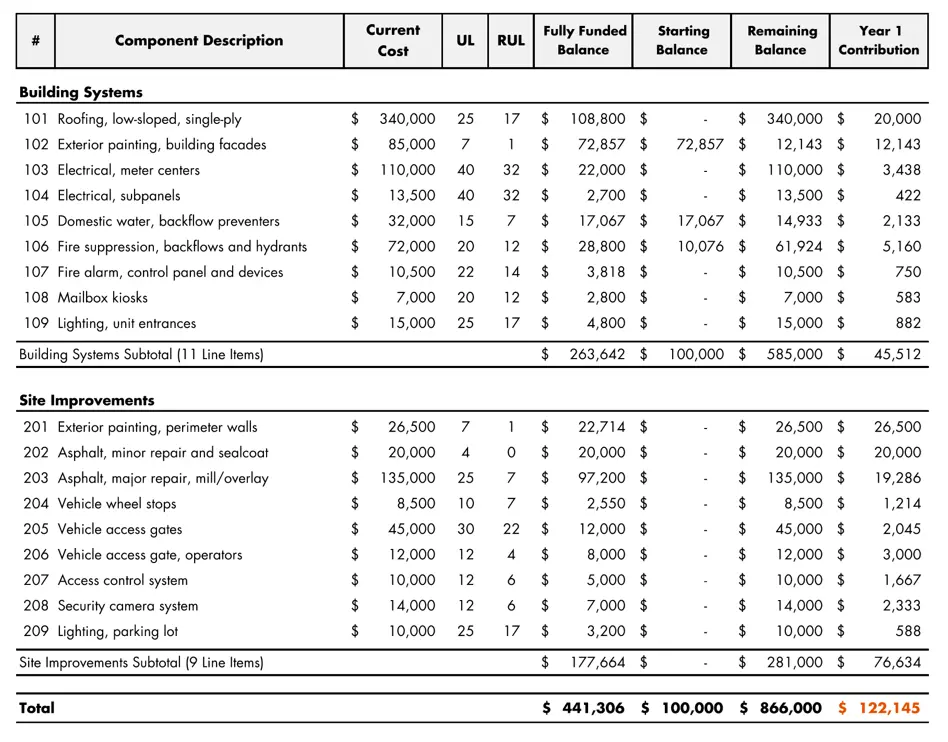
Pooled funding evaluates all reserve components together rather than funding each item individually. This method allows available funds to be used where needed, when needed. This excerpt shows how pooled funding can smooth contribution requirements while still accounting for future capital obligations. See our Straight-Line vs. Pooled Reserve Funding comparison guide for more information.